A Melodious Sonnet

  • Home
  • About Me
  • Contact Me
  • Legal Things
    • Disclosure
    • Privacy Policy

Your Three-Year-Old Can Write, part 2: Examples

June 1, 2015 by Esther Filbrun · 1 Comment

1 Jun

We’ve established the fact that teaching writing to your children from an early age is important. Today, I’d like to give you a few examples of what my young brothers write about, and how your youngsters can write too.

Your Three-Year-Old Can Write, part 2: Examples

Photo courtesy of Pixabay/Efraimstochter | License: CC0 1.0

Tip #1: Ask Them to Tell You About a Recent Experience

Sometimes, a story can spring from a simple life experience. In the following story, my brother was telling what he saw when we went to visit a local zoo called Willowbank.

We going to Willowbank and we go into the office. We see eels at Willowbank. I see ducks. I feed ducks bread. They ate it all gone. The monkey was going up to the branch and up to another one branch, one, two branches. That long branch! There were chickens in the chicken pen. —J, two and a half years old

Tip #2: Write Down Their Imagined Stories

Sometimes, my brother will come through with a story to tell to whoever will listen to him. This was a product of one of those occasions—when Mom was able to write it down. Obviously, she did not edit—she just wrote it as he told her. Right now, it may not make a whole lot of sense—but it will definitely be fun to read in years to come!

A man was taking a walk with his dog and he was walking on the road with his dog and he was going to motels and he was going into motels watching motel clean the living room up with the vacuum and vacuum his garden up and taking a walk with his dog and the daddy dog died and humongous bushes and there was a lion in the bushes. —N, three years old

Just for fun, here’s another example:

I was walking through the woods one day. A bear jumped out of the forest, and I speared it. I had flint and steel in my pocket, and I started a fire. I had forked sticks up on top so I could dry the meat and the skin. I made metal forked sticks out of flat sticks of steel. And I had that bear for my tea. It tasted like cow meat.

I went out diving one day, and speared a shark. I had a string so I could tie it onto the tail. I pulled it to shore. Then I speared a seal. I chucked it into the sea, and the other sharks ate it. I washed my hands, and I went back to the forest.

Another bear jumped out at me. I was dragging the whale still. I speared the bear, and I put it in my small freezer. It wasn’t very small. I chopped off feet. I was close to a sea. I chucked them in the sea, and the sharks ate them. —J, four and a half years old

Tip #3: Let Them Tell About Their Daily Life!

In this next example, my brother reiterated his daily life. Obviously, this was how he said it then–fun to compare with how he talks now.

… Sheep is going in paddocks when I chase them. I chase your cow, Mom. I chase Mom’s cows when they go in cow’s water. I go home. I am sweating over the place. I go in the house. Daddy is coming home after lunch. When I come I eat glue. … I can taste really good. I not taste it. I go to the pen and wait for the boys to get done getting the cows. When they come they go running. They go running lot of times. They scream. —J, two and a half years old

Tip #4: Ask Them What They’d Like to Write About

In the following example, my brother asked to watch a video about lions. Mom found one on Youtube for him, and he based this piece on that.

I want to write about lions. They jump. And they jump onto the rocks. They eat animals. They save baby lions. They play with little lions. They sleep a lot and baby lions sleep a lot. They eat giraffes and zebras. And kill animals. —N, three years old

Tip #5: Encourage the Different Forms of Writing They May Choose

This poem was not an assignment at all—my brother just decided to make his story into a poem of sorts. Definitely something you want to encourage if you see your child wants to do something like this!

Pick up trash.
Pick up trash.
Pick up trash.
On the beach.
Rolling, rolling sea.
With the picked-up trash go on the rolling, rolling sea.
With the hat on the rolling, rolling sea.
Pick up trash.
Pick up trash.
Pick up trash on the rocks.
—J, three and a half years old

Tip #6: When They’re Ready, Give Them Assignments

The following was an assignment that came from our science course. After several years of writing, he was ready to do something a bit more intensive than just retelling his life or telling a story. For this particular assignment, he had to pick a bird, do a bit of research about it (with some help, of course), and then write a few sentences about the bird.

Bald eagles go high up in trees to have a nest. They migrate from north to south in North America. Their favorite food is fish. They are big. They are a meter long. They are two meters wide, from one tip of the wing to the other one. They live in North America, close to the sea. They aren’t actually bald. They are black and white. Their beaks are yellow. —J, five and a half years old

One of the beauties of starting early is that you get to watch them slowly get better at turning their thoughts into coherent words, sentences, and eventually, paragraphs. While it may be hard to start your youngsters writing at an early age—especially if you have a baby or toddler to watch at the same time!—don’t despair. If you can do it, wonderful! If not, they’ll learn later. Either way, you’re doing great—have fun!

Midweek Mix-Up: 2 Books I’m Reading Now, and Horse Rides

May 27, 2015 by Esther Filbrun · Leave a Comment

27 May

Welcome to today’s version of midweek mix-up! I hope you enjoy reading these posts as much as I do compiling them! Now, on to . . .

Books of the week:

Completed books:

Ready or Not, by Chautona Havig

Ready or Not, by Chautona Havig

This book ended up being just as good as Mom had told me. I really enjoyed the story, and when William finally told Aggie his secret, I was relieved. I’ll be putting up Mom’s review of the book soon—since she reviewed it already, I won’t repeat her.

For Keeps, by Chautona Havig

For Keeps, by Chautona Havig

After finishing Ready or Not, I had to read this second book in the series. Aggie’s struggles in learning to be a homeschooler and her fight against chicken pox were rather amusing to read about. The romance (very clean romance, but definitely romance) was fun to watch as well. I’m planning to post Mom’s review of this book soon too.

Books currently in progress:

Here We Come, by Chautona Havig

Here We Come, by Chautona Havig
Progress: 57% read

After finishing Ready or Not and For Keeps, I was especially glad to know we have the third and final book in the series. As a writer, I’m looking forward to seeing how the climax works to finish off the series. As a reader, I’m looking forward to seeing how Aggie’s fiance and she get along—and if the children start behaving. Currently, Aggie has been on a huge emotional roller-coaster, and is feeling pretty burned out. I still haven’t decided if the tension is stronger in this book than in the last two, or if it’s just different—I’ll probably have to finish the book to decide.

More Than a Carpenter, by Josh McDowell

More Than a Carpenter, by Josh and Sean McDowell
Progress: 6% read

I did get a bit further in this this week. Right now I’m reading about why Jesus is different from other famous prophets—and what the name “Jesus Christ” means. Fascinating book.

Next on the to-read list:

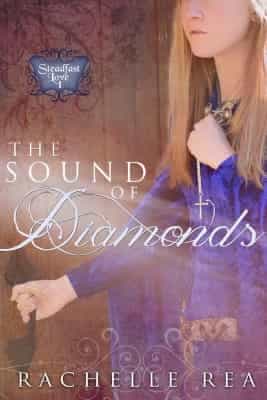
The Sound of Diamonds, by Rachelle Rea

The Sound of Diamonds, by Rachelle Rea

This is Rachelle’s debut novel, so I don’t have any experience with knowing what her style is like. I’ve heard about this book for several months now, and recently she offered advanced reader copies, so I asked if I could be an advanced reader. I’m looking forward to reading this book—and knowing what she reads, I’m hoping it won’t have too much romance in it!

Memory of the week:

I helped give my baby sister her first “horsey-ride” the other day. She seemed to enjoy it—and her brothers loved being the horses for her!

Playing horseback riding

Useful posts this week:

  • These Books Are Free On Kindle! — Some fascinating books here—ones that I want to read soon. I need to learn to get into more classics—I love them, but it takes some determination to start reading them.
  • Which Copy is Best For Your Home Page? — Very helpful information about home pages, and what length and content makes the best conversion rate. Now, to put this information to use!
  • 100 Books for 1st Graders to Read — This one was recommended by Mom. She said that some of the books here are ones she wouldn’t tend to like, but others are very good.
  • 5 Ideas for Author Newsletter Content — A fun, inspiring post for creating a good newsletter. I have a feeling I’ll be referring back to this next time I’m writing the LRD Newsletter.
  • For The Sake of Research — A very humorous post on the things an author has to go through to ensure they have the setting right. What happens if you video the interior of a bank?
  • Yielded or Tossed? — An encouraging devotional—the perfect start to my day. Katie’s words are always so challenging to me, and yet so true. Much to think about from this post.
  • The Weekend Edition — Seekerville, a daily blog for writers, always has these fun “weekend” posts. They’re just about my most favorite posts of the week! If you’re a writer who wants encouragement, I’d recommend checking this blog out. It is mostly geared toward romance writers, but many of the tips they share are really helpful no matter what form of fiction you write.
  • The Daily Routines of Famous Creative People: INFOGRAPHIC — Fascinating infographic, and I highly recommend checking out the interactive version on podio.com. I especially found it interesting that out of twenty-six people, only eight did any actual work between 12 am and 5 am—almost everyone else was asleep during that time.

Resource of the week:

A post, resurrected from the archives of my bookmarks: 9 Best Tools to Make Writers More Successful, Organized, and Effective. Who knew that gem was there? I completely forgot! But those tools look very useful. There are several programs mentioned in the comments as well that look handy. I’m planning on checking out SquareSpaceNote and The Timeline Project as soon as I’m done here.

What did you come across this week that you found particularly inspiring or helpful?

Your Three-Year-Old Can Write (part 1)

May 25, 2015 by Esther Filbrun · Leave a Comment

25 May

Teaching writing to children is a very difficult task. I remember my frustration as a seven-year-old trying to correctly write down and spell a few sentences that Mom was dictating to me. It was hard enough to try to write down someone else’s words properly. But it was even harder to write down my own words—trying to be both creative and write at the same time.

Many times, when we think of teaching writing, we think of the motor skills involved—holding the pencil correctly, having the paper at the right angle, keeping within the lines, and using proper spelling.

I believe that that is not real writing—yes, that is part of the process of being a writer, but that is not who a writer is.

Your Three-Year-Old Can Write (part 1)

Photo courtesy of Pixabay/RaphaelJeanneret | License: CC0 1.0

A writer is creative, is imaginative.

I have a three-year-old brother, and he loves telling stories. Ever since he first learned to talk, he’s been telling stories—stories of baby lions, tigers, cows, and kittens. And, occasionally, what he’s done with his imaginary animals. He’s already a writer, even though he’s just three.

Three-year-olds are often both very creative and very imaginative–perhaps, sometimes, even better at it than we adults are! There is no reason in the world why a three-year-old can’t think creatively. Yes, he may at times struggle with coming up with the right words to use. But, all the same, he’s a writer.

Today, I’m talking about the creative side of writing. We can’t write without creativity. I believe it isn’t the motor skills that matter at all—instead, it’s the thinking and putting the thinking into words that really counts.

No matter where we go in life, we have to be able to write something. Whether it is reports, letters, essays, or even a status update on Facebook, we have to know how to get our thoughts onto paper. No matter what curriculum you use to teach your child, they will one day have to write something. When you can tell they’re ready to begin writing stories–even if they’re very short–encourage them. Practice makes perfect. 🙂

One major benefit of writing for them when they’re still young is that they can learn to use the imagination they already have. By the time children reach seven or so, and especially when they try to learn the mechanics of writing, they’ve often lost some of that early imagination that often accompanies two and three year olds. If children can learn from two or three up how to formulate their ideas into a story, and put those ideas into words, they may have a much easier time of it later when they have more formal work to do.

Here are five ways to encourage creative writing:

  1. Write for them. Take a dictation; write down your child’s exact words. By being able to dictate, and not have to do the mechanics of writing, children can focus on the creative side of things and not lose their flow of thought. Also, don’t edit.
  2. Read lots of good books. Give your children examples of what good books are like. Reading never hurt anyone—and the more you read to them, the wider their horizons grow. When they have good examples to follow, they will find it easier to write well themselves.
  3. Give simple assignments. Many times, it is hard for a child to know what to write about when they’re told they need to write. Often, they need a place to start off. Here are a few examples of topics you could give to your youngster:
    • Write about your favorite animal
    • Write down three things you like about someone you love
    • Discuss a place you’d like to visit, and what you’d like to do there
    • Tell about a recent happening
    • Write to Grandma
    • Write a book report

    If you’re stuck for ideas, try Googling “writing prompts” or searching Pinterest—there are lots of fun picture prompt boards on there.

  4. It doesn’t have to be long. One or even two sentences are fine, especially for younger children.
  5. Give hints. If they seem at a loss for what to say next, or how to word it, it’s okay to give them hints or ask leading questions to get going again. It’s all part of the learning curve.
  6. Edit. For young children, saytwo- to five-year-olds, you probably don’t want to edit their work. Above five or six, though, you will want to start building foundations for proper grammar and sentence structure. Below are two examples of how Mom does this:
    • “Me and John walked . . . ” Mom suggests, “John and I walked?”
    • “We was . . . ” Mom suggests, “We were?”

    Most of the time, whoever it is that is writing will approve of the change, and they move on. The hope is that someday some of these changes will sink in and become second nature—and the earlier you start with this, the better.

    Update: One mother who I talked to recently on this subject said she usually edited everything as she went, and just mentioned one or two changes through the course of the dictation. So find what works for you–and feel free to experiment!

Any child can write. All of my brothers are writers, and several of them struggle with dyslexia. They all do an excellent job of coming up with stories, even if they normally aren’t all that interested in books.

One thing that has greatly helped our family is attending a homeschool writing group—where each child brings something to share, and receives suggestions and encouragement to help them write even better. Through that, my brothers have had to write something before each meeting in order to be allowed to go. That has greatly helped in giving them regular practice.

For years, I hated writing of any kind—everything about it bored me. It wasn’t until I realized the magic of spinning your own tales that I began to love the art.

With that in mind, it might take a while for your youngster to begin to really enjoy writing. And, perhaps, they aren’t cut out to be a writer in the end. It never hurts to get experience, though, and if they are willing, give it a try.

For a few more tips, and some examples of writings my brother did at two years old, come back for part two on Friday.

How to Create Effective Incentives for School Work

May 22, 2015 by Esther Filbrun · Leave a Comment

22 May

Sometimes, it is hard to get school done. Almost as hard as pulling hen’s teeth. This is where incentives for school work are needed—with simple rewards, your students can learn to work faster and harder.

Near the beginning of the school year, for a week or so anyway, it’s fairly easy to get the work done fast. Past the first month or so, the momentum starts to slow down—until it’s only a fraction of the original speed, and we’re all tired of how long it’s taking to get anything done.

How to Create Effective Incentives for School Work

Photo courtesy of Pixabay/Hebi65 | License: CC0 1.0

A few years ago, after seeing how slow we were going, Mom decided to implement a rewards system where if we got a prescribed amount of work done by lunch time then we could get a treat. It worked—and we used the system for several months, before we all got tired of eating the same reward every day.

Three Ways to Create Incentives:

  1. Find simple rewards. They don’t have to be very fancy—they just have to be effective. For a while, we were using simple peanut butter balls (see recipe below). Everyone who got done in time received a peanut butter ball, and those who didn’t just missed out.
  2. Find simple consequences. Sometimes, a child does not get his work done no matter how many rewarding incentives you give them. For example, say a child is way behind on his math. Since he is so far behind, and not catching up—even though he could have easily finished within an hour or two—a simple consequence could be digging a bucket of potatoes the next day for Mom if he doesn’t get done by a certain time. This is an easy enough chore, usually done in fifteen minutes or so.
    (Note: I am not encouraging enforced labor simply because a chore is not done in time. This kind of incentive is only used when there is an ongoing problem, and when the student can easily catch up by applying himself.)
  3. Create heavier-duty rewards for habits. Recently, Mom has been trying to teach my brothers some life-long habits. Instead of just telling them to work on them, she decided to help them keep track of how they’re doing. Each day they successfully complete a job associated with the habit, they earn 5¢. Every day they miss, they lose 5¢.

Consistency is a key to making incentives work. For busy Mothers, though, it is hard to remember who gets what reward.

One way Mom has combated this problem is by giving a universal reward to everyone. She also has a set consequence for those who particularly struggle. For example, one of my brothers loves to sleep outside. He is normally allowed to sleep outside, but on the days he doesn’t finish his school work in time he has to sleep inside. This is a very simple consequence, but most of the time it does the job—his work gets done early.

Peanut Butter Balls RecipePeanut Butter Balls Recipe

  • ½ cup peanut butter
  • ¼ cup dessicated coconut (+ some to coat balls in)
  • ¼ cup raisins
  • 1 tsp. honey (or other sweetener)

Mix well, roll into roughly 1″ balls, roll in coconut.

For variations: I’ve sometimes added cocoa powder, or cinnamon and cloves, to give different flavors. It is also possible to add vanilla, almond, caramel, or other essences to give different tastes. Chocolate chips and dried mixed fruit are good replacements for the raisins. Feel free to experiment—this is just the base recipe!

Even though the rewards for school work well done can be very small, they are effective. Mid-school blues are hard to push away, but by being creative, the work can become more fun again.

How have you used incentives before? Did they work?

Midweek Mix-Up: 4 Books I’m Reading Right Now, and Useful Randomness

May 20, 2015 by Esther Filbrun · Leave a Comment

20 May

I love fun, not-always-stiffly-serious blog posts. And yet, at the same time, I want to make sure you have something helpful to take away from every post. Hopefully, I can find a balance of that today.

4 books I’m reading right now . . .
Give Me This Mountain, an autobiography by Helen Roseveare

Give Me This Mountain, an autobiography by Helen Roseveare

I’m roughly half way through this story. Helen is very transparent when it comes to sharing her spiritual life at different stages, and I’ve found that very encouraging because often I see myself in her shoes. Knowing someone has been there before really gives a new perspective on things.

The Eagle, by Rosemary Sutcliff

I don’t like this cover. Underneath, it is a great story—I just hope they haven’t changed it to go along with the movie. Our version is the previous edition of this one.

The Eagle (previously Eagle of the Ninth), by Rosemary Sutcliff

This was first introduced to me as part of our school curriculum. Mom recently read it to the boys again, and I heard bits and piece—enough to make me want to read it again, but not enough to hear the whole thing! She’s been reading the two sequels to the boys lately, and they are loving them, as well. I’ve only read the first chapter so far, but hope to get back to it soon!

More Than a Carpenter, by Josh McDowell

More Than a Carpenter, by Josh McDowell

Another “school” book. This small volume is both incredibly challenging, and incredibly reaffirming. Josh presents the facts without any apology, and seeing the pure truths of who Jesus really is—in all their beautiful glory—is very encouraging. This book is a great devotional, and even just reading one or two pages before bedtime is enough to give you much food for thought.

Ready or Not, by Chautona Havig

Ready or Not, by Chautona Havig

This is by far the most favorite book I’ve been reading lately. Mom finally convinced me to read it after all her ranting, and I’ve got to say I’ve fallen in love with the story too. Aggie, mother of eight inherited children, is so real in all her struggles of learning to be a mother—let alone learning to deal with her inherited mother-in-law! Even though Ready or Not is a long story, I’m enjoying every word—and glad to know there are two more books in the series waiting for me to read them! Oh, and did I mention I love the humor in the story?

Most exciting event this past week . . .

We had this big brush pile out back, and now that the fire ban has finally been lifted (we’ve had a bad drought all summer, so we were not allowed to burn fires for quite a while) the boys finally were allowed to burn it. Did they ever have fun, too!

Fire 01

From the yard, just after they lit it.

I got a few pictures of the proceedings, but soon had to get back to work—leaving it under the watchful eye of the firefighters.

Fire 02

I didn’t get any very good pictures of the main firefighter, because he was almost always running to put out small patches of grass that caught. This was the best—he was working very hard!

Most useful posts this week . . .

A random collection of posts I’ve found interesting and helpful this past week.

  • Why Everyone From Beethoven, Goethe, Dickens, Darwin To Steve Jobs Took Long Walks and Why You Should Too — Both challenging and thought-provoking. I’d like to get more exercise, but actually getting out there and doing it is the trouble. What do you think? Is walking worth the time you spend doing it?
  • How To Only Share Your Written Gems, Not The Rough — Interesting take on sharing your writings with others. Some really good tips here to remember.
  • How to Work on Multiple Long-Term Creative Projects at Once — Must. remember. this.
  • Don’t Do These 12 Things When You Write Your Draft — Too many of these strike home. Especially 2, 3, 5, 6, and 12.
  • The Foolscap Method — Not technically a blog post—instead, it’s two teaching videos, but powerful all the same. Basically, Steven Pressfield is teaching you how you can hold your entire story on just one page. This has the potential to completely change the way I look at plotting my stories—and has already proved to be very useful!
  • How To Make Cappuccino Using French Press — Also not a blog post—a video. And the only reason I was interested in it is the fact that it tells you how to use a french press to make a latte! That is like . . . the neatest thing all week! Now, to figure out what to turn into a latte next . . . .

This week’s resource . . .

I’ve been using this little calendar for three months now, and it has proved to be the most effective tool so far for tracking work chains—I can see at a glance what days I was very productive, and what days I was . . . shall we say, not so productive.

2015 Work Chain Tracker

Seeing how well (or badly!) I did last week is encouraging, and challenges me to do even better this week. It is also a great way to keep a quick record of what I’ve been doing. At the end of each month, I tally up how many hours I’ve done on a particular project all together, and sometimes average that to each day I’ve worked, to see how many hours minimum I should try to do per day to beat that. (Side note: Time Calculator is very helpful for the calculation side of things—just input your times, and it will do the rest for you.)

I’ve been using this tracking system for almost three months now—tracking three different projects—and it’s still proving to be very helpful.

If you’d like to try it out for yourself, see the links below. I usually print it four-up (four pages per page) and just one-sided, so it’s a handy pocket-sized calendar that fits easily on my pin board. Do whatever works for you—I’d love to hear if it helps!

Download the free printable:

  • Unmarked Version
  • Marked Version (basically the first version, but with phases of the moon and a few select holidays—I like this one best, mostly because I like seeing what’s coming up next)

The idea for using a calendar like this was inspired by a passing mention in a blog post by Raychel Rose, so all credit goes to her. 🙂

Have you found any easy hacks for tracking the time you spend? Also, what’s the most useful post you’ve come across this week? Feel free to share below—I love hearing from you!

  • « Go to Previous Page
  • Page 1
  • Interim pages omitted …
  • Page 54
  • Page 55
  • Page 56
  • Page 57
  • Page 58
  • Go to Next Page »

Primary Sidebar

Find Me Online

  • Facebook
  • X
  • Instagram
  • Goodreads

Recent Posts

  • April 2026 TBR List: History, classics, and continued series
  • A Few of My (Current) Favorite Things
  • 2026 Reading Goals (& 2025 Goals Recap)
  • My Top 10 Favorite Reads from 2025
  • June TBR List: Classics and Miscellany

Subscribe to Blog Updates

/* real people should not fill this in and expect good things - do not remove this or risk form bot signups */

Intuit Mailchimp

Recent Comments

  • Esther Filbrun on Banana Passionfruit Jelly/Jam
  • Monica Murray on Banana Passionfruit Jelly/Jam
  • Esther Filbrun on For the Love of Sourdough
  • birdyandnerdy on For the Love of Sourdough
  • Esther Filbrun on September TBR List // going WAY overboard with my selections (14 books!)

Disclosure

Some links on this site are affiliate links.

Archives

Copyright © 2026 · ·Refined Theme · Privacy Policy · Privacy Settings